


Sound, when emitted by a source — whether a person or a piece of equipment — propagates in all directions through space, being reflected, absorbed, transmitted, or diffracted as it encounters surfaces and objects. As a result, every environment has its own acoustic quality, often difficult to perceive without a trained ear or eyes. But sound shapes architecture in subtle yet profound ways, directly influencing how we concentrate in an office, how students engage in a classroom, how patients recover in a hospital, or how an audience connects in a performance hall. Despite its decisive role, acoustics often remain in the background of design discussions, overshadowed by visual and structural considerations.

Today, a wide range of solutions can improve the acoustic performance of a space, by combining absorption, diffusion, insulation, and thoughtful design strategies to control noise, reduce reverberation, and enhance sound clarity. For this, architects can follow two main paths: making acoustics visible as expressive design features, or integrating them seamlessly into the architecture so they become imperceptible. Both strategies require technical rigor and can significantly influence spatial character and this choice need not be absolute, as many projects combine seamless surfaces in some areas with striking elements in others. What matters is the ability to calibrate acoustic performance with spatial character, ensuring that technical precision aligns with the intended user experience.
Acoustics as Discretion: Continuity and Subtlety
In spaces where the goal is to minimize visual distractions and emphasize continuity, acoustic systems are designed to disappear. The Ensemble™ Acoustical Drywall Ceiling by USG embodies this approach, combining advanced acoustic performance with a monolithic aesthetic. Its multilayered, micro-perforated composition achieves high levels of sound absorption (NRC up to 0.80), ensuring auditory comfort even in spaces with significant reverberation, while maintaining the clean, seamless appearance of a traditional drywall ceiling.
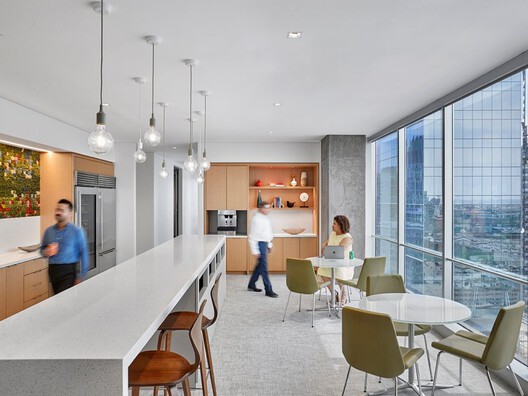
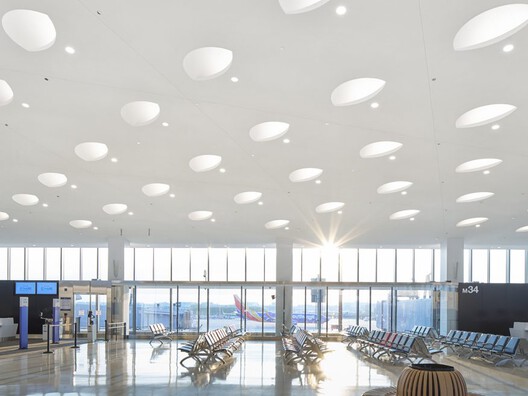
The solution also offers durability, a uniform finish, and design flexibility, as it can be installed on flat or curved surfaces without limiting the architect's creative freedom. Another advantage is its integration with drywall construction, enabling efficient installation, localized repairs, and compatibility with various types of recessed lighting. In this way, acoustics fulfill their role without drawing attention, reinforcing the atmosphere of the space and respecting the architectural intent.
Acoustics as Presence: Design Features with Character
On the other hand, acoustics can be celebrated as an expressive layer of architecture. The Barz® + Brilliance Integrated Lighting system by USG exemplifies this approach by combining effective sound absorption with a modular design that emphasizes rhythm and spatial identity. Composed of linear baffles available in different finishes and colors, it allows for customized compositions ranging from minimalism to bold expression, adapting equally well to corporate interiors and cultural spaces.
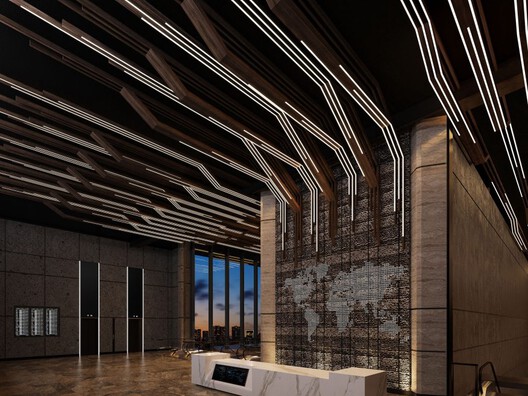
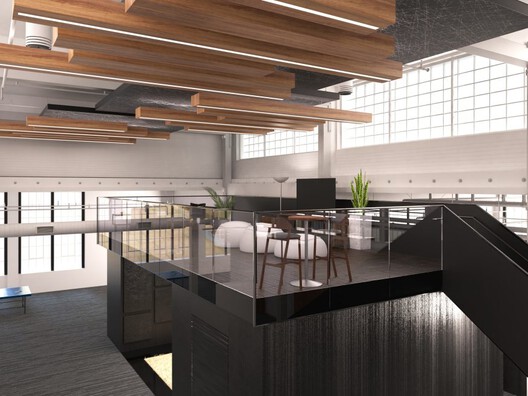
Its defining feature is the integration of lighting: recessed fixtures can be combined with the acoustic panels, eliminating the need for separate systems and resulting in a multifunctional ceiling. This enhances both visual and acoustic comfort, enabling architects to compose environments with greater depth and atmosphere and beyond the aesthetic appeal, the panels deliver high acoustic performance, reducing reverberation and improving speech intelligibility.
When echo makes conversations tiring, when outside noise breaks concentration, or when reverberation blurs the clarity of a presentation, the truth is that most people only notice acoustics when it fails. Well-designed spaces, on the other hand, provide an almost imperceptible comfort, allowing experiences to flow naturally. It is in this balance between technical precision and sensory perception that acoustics becomes an essential part of architecture.


